Best Offset Smokers
Offset smokers — the classic "stick burner" design with a separate firebox mounted to the side of a horizontal cooking chamber — produce the best smoke flavor of any backyard cooker. They're also the most labor-intensive: you're managing an actual wood fire, not pressing a button. That tradeoff is the whole point for a certain kind of cook. If that's you, here's what to know before you buy.
The honest learning curve
An offset smoker rewards attention and skill. Unlike a pellet smoker, temperature control isn't automated — you're feeding splits, adjusting airflow through dampers, and reacting to weather. Expect your first few cooks to be uneven while you learn how your specific smoker behaves. The payoff is smoke flavor and bark that pellet cookers genuinely can't match.
The other thing to know: cheap offset smokers are notoriously leaky. Thin steel warps, seals gap, and temperature swings become worse over time. The price tier you buy into matters more on offsets than on almost any other backyard cooker.
What actually matters in an offset smoker
- Steel thickness. 1/4-inch steel is the benchmark for serious offsets. Most entry-level smokers use thinner gauge that warps, leaks, and doesn't hold heat. Thicker steel heats more slowly but holds temperature far more consistently and lasts much longer.
- Firebox-to-chamber ratio and placement. The firebox should be sized appropriately for the cooking chamber so the fire can be managed in a reasonable range without choking. A firebox that's too small relative to the chamber makes temperature management much harder.
- Reverse flow vs. traditional flow. Traditional offsets draw heat from the firebox end; the meat closest to the firebox runs hotter. Reverse flow designs add a steel baffle that forces heat under the entire cooking grate and out the other end before rising — more even temperature across the chamber at the cost of slightly reduced smoke intensity.
- Seals and gaskets. Smoke and heat should exit the chimney, not leak around the lid. Cheap offsets don't seal well from the factory; some people add aftermarket gasket tape (a $15 fix that makes a real difference on otherwise decent units).
- Firebox access and ash management. You'll be adding wood and removing ash during long cooks. An inconvenient firebox door or no ash pan makes this miserable at 2 AM on a brisket cook.
Entry-level: Oklahoma Joe's Highland
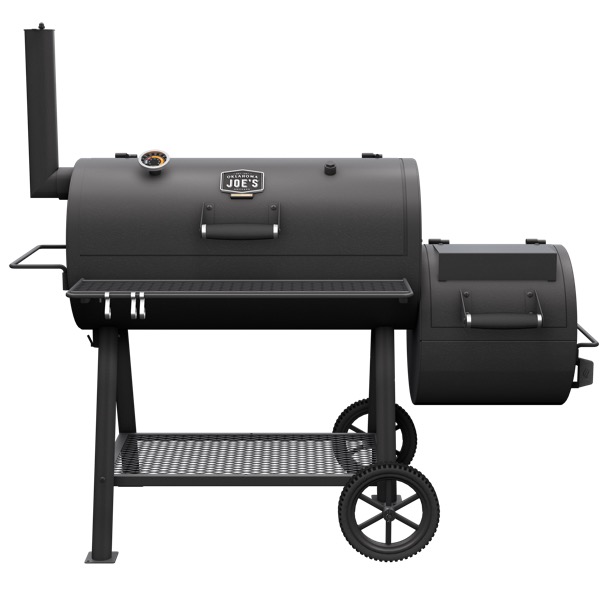
Oklahoma Joe's Highland
The Highland is the most widely recommended entry-level offset for a reason: it's affordable, widely available, and produces genuinely good results once you understand its quirks. The steel is thinner than a serious competition smoker, and it leaks more than it should from the factory — but the community of people who own it is enormous, so the workarounds (gasket tape on the lid, tuning plates for more even heat) are well-documented. If you want to learn on a real offset without spending $1,000+, start here.
Best for: first offset smoker, budget under $400, cooks willing to do some modification.
Check Price on AmazonMid-range: Oklahoma Joe's Longhorn Reverse Flow
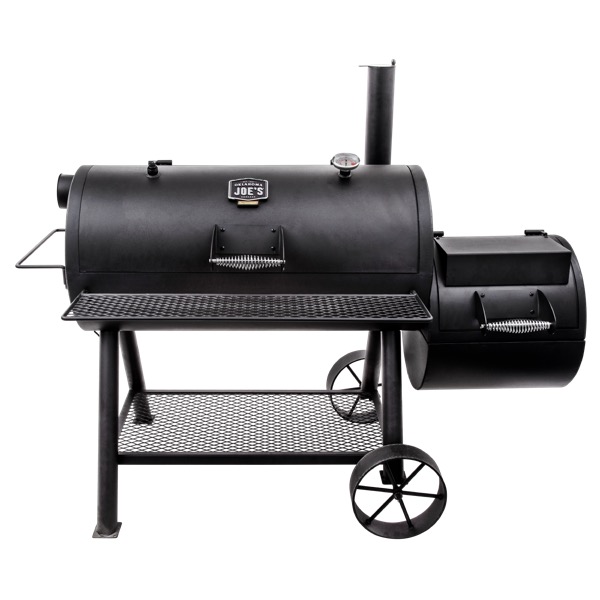
Oklahoma Joe's Longhorn Reverse Flow
More cooking space than the Highland and built with a reverse-flow baffle for noticeably more even temperatures across the grate. Still in the thin-steel category, but the larger size and better airflow design make it more forgiving to manage than its smaller sibling. A solid step up if the Highland feels too small or you want more consistent temps without going to a significantly higher price tier.
Best for: cooks who've outgrown the Highland or want more grate space from the start.
Check Price on AmazonSerious step-up: Yoder Smokers and Lang BBQ
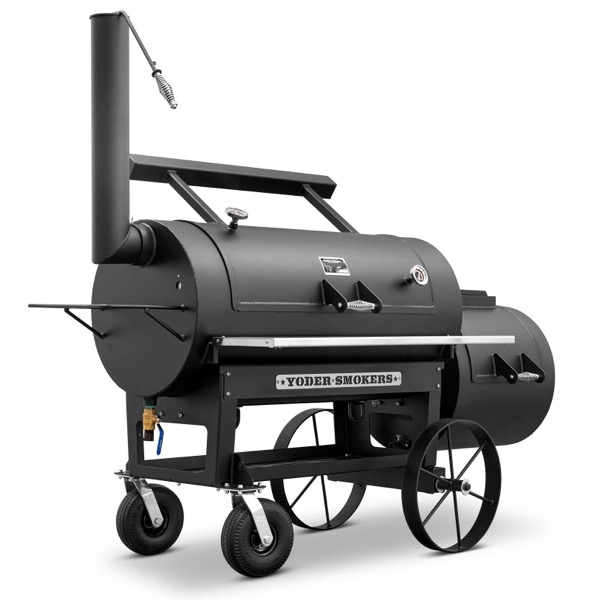
Yoder Smokers YS / Lang BBQ Smokers
At the $1,500-$3,000+ price point, you're getting heavy-gauge steel (1/4 inch or more), significantly better seals, and far more consistent temperature management. Yoder makes both offset stick-burners and pellet smokers; their stick-burners are built in Kansas and carry a reputation for lasting decades. Lang BBQ Smokers are reverse-flow specialists — the reverse-flow offset format was largely popularized by Lang, and their units are respected competition and backyard cookers.
These are investments, not impulse purchases. Buy at this tier when you've cooked on a cheaper offset long enough to know you want to stay in the format — not as a first smoker.
Best for: experienced offset cooks upgrading from an entry-level unit, or cooks who want to buy once and not buy again.
Search Yoder Smokers on AmazonAlso consider: Old Country BBQ Pits (regional, not Amazon)
Old Country BBQ Pits (sold through Academy Sports + Outdoors in the South and Southwest) offer heavy-gauge steel at a price point well below equivalent-quality smokers from other brands. If you have an Academy near you, the Pecos, Wrangler, and Brazos models are consistently praised for the price-to-build-quality ratio. Not available on Amazon, worth knowing about.
How an offset compares to other smoker types
Read our charcoal vs. pellet smoker comparison if you're still deciding whether an offset is the right format — it covers who each type actually suits.