Best Meat Thermometers for Smoking & Grilling
More barbecue gets ruined by guessing temperature — pulling meat too early, overcooking while "checking," or never knowing your actual smoker temperature — than by almost anything else. A good thermometer is the highest-leverage purchase you can make before your next cook, and it's also one of the cheapest.
The two things you're actually choosing between
- Instant-read vs. leave-in probe. An instant-read thermometer is for quick spot checks (great for grilling steaks or chicken). A leave-in probe thermometer stays in the meat for the whole cook and is what you want for low-and-slow smoking, where you need to track temperature over hours without opening the lid repeatedly.
- Wired vs. fully wireless probes. Wired leave-in thermometers run a cable from the probe to a base unit sitting outside the smoker — reliable and usually cheaper. Fully wireless probes (no cable at all) are more convenient but rely on a charge and a Bluetooth/WiFi connection that can be less reliable through a thick metal smoker lid.
Recommendations by use case
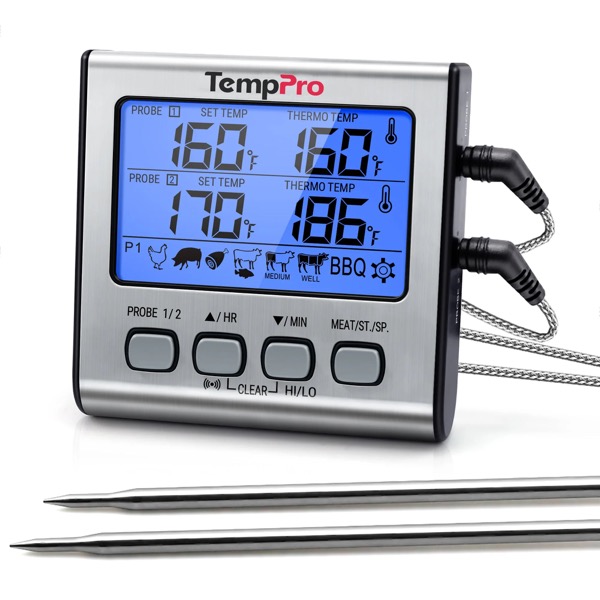
ThermoPro (TP-series leave-in probe thermometers)
ThermoPro's multi-probe leave-in thermometers are a consistent, well-reviewed choice for tracking both smoker/pit temperature and internal meat temperature at the same time — the combination that actually matters for smoking. Models with 2-4 probes let you monitor multiple cuts or both pit and meat temperature simultaneously.
Note: ThermoPro rebranded to TempPro in 2026 — same company and products, new name and logo.
Check Price on Amazon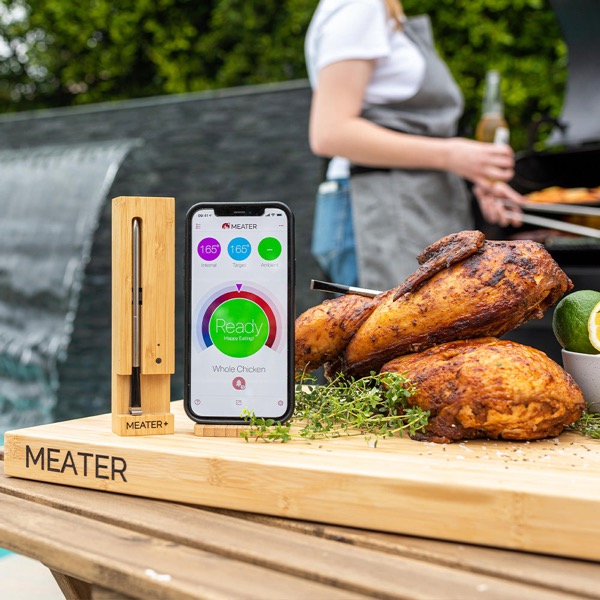
MEATER (Plus / Pro models)
MEATER's fully wireless probes have no cable running out of your smoker at all, which is genuinely convenient, especially on grills/smokers where routing a wire is awkward. The tradeoff is reliance on Bluetooth range and a charging case — worth it for the convenience if you're willing to manage one more rechargeable device.
Check Price on Amazon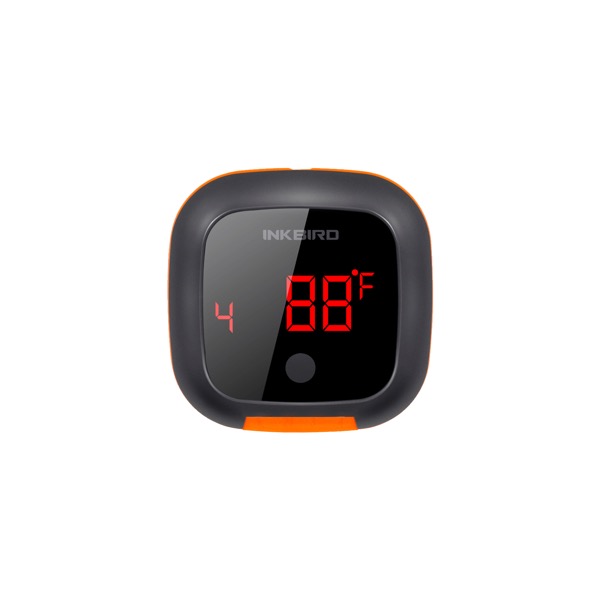
Inkbird (IBT-series)
Inkbird's wireless multi-probe thermometers consistently come in well below $50 while still covering the core feature set (multiple probes, app connectivity) that more expensive brands charge a premium for. A sensible choice if you want reliable temperature monitoring without paying for a name brand.
Check Price on Amazon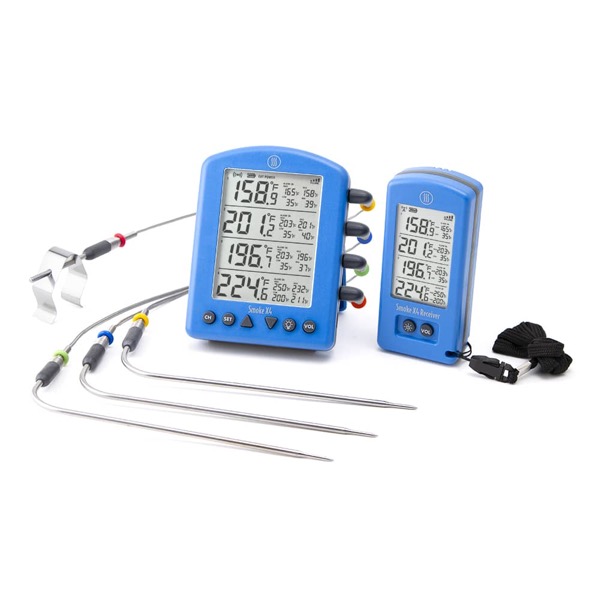
ThermoWorks (Smoke and Smoke X series)
ThermoWorks built its reputation on accuracy and durability rather than app features — the Smoke line works as a dedicated wired receiver/base unit with strong range, long battery life, and no smartphone required. A good choice if you'd rather not depend on a phone app mid-cook.
Check Price on AmazonOne thermometer habit that matters more than the model you buy
Whichever thermometer you choose, calibrate it occasionally in ice water (should read 32°F / 0°C) and boiling water (should read 212°F / 100°C at sea level, adjusted for altitude) — probes drift over time, and a thermometer that's off by even 5-10 degrees can be the real reason a cook came out wrong, not your technique.
Prices and specific model availability change often — always check current pricing and specs on Amazon before buying rather than relying solely on this page.